

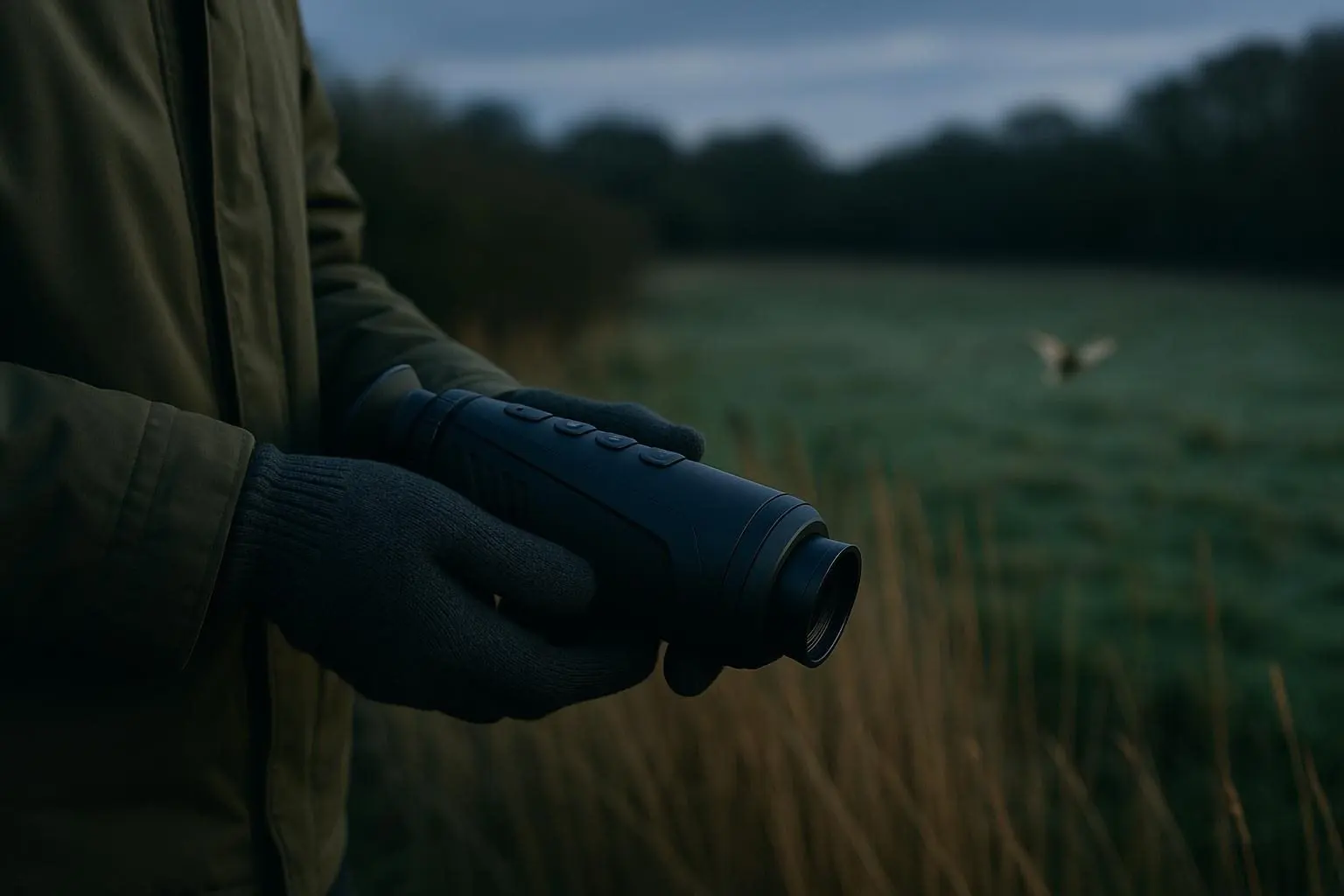
Observing Nocturnal Birds: The Ethics and Strategy of Thermal Identification
In the quiet of the night you might see an owl as it moves from a hedgerow. Your thermal viewer shows a spot that might have been missed with your binoculars. The urge to follow the warmth and find out what kind of bird it is can be powerful but this chase often turns observation into a wild hunt. An experienced observer understands that just watching can be enough. Knowing when to stop is as important as knowing what bird it is.
Prioritize Minimal Disturbance
Before you even use your device think about what could go wrong. An owl waking up from where it's moving to a new place or acting defensively can mean you have entered its space. These signs usually appear through careful watching so it is important to stay far away and not act in a hurry.
Using technology does not make you invisible to the bird. The sound of your steps the talk with a friend, your shape against the dark and even your smell can tell the bird you are there no matter what the thermal picture shows. It is smart to come near the place where you think the bird is from a distance keep your talking soft and avoid bushes. Use paths that are already there and never go onto land or special nesting places just because thermal pictures make it look like a bird is there.
The main idea to remember is this: if getting a picture means moving in a way that bothers the bird or using a light or waiting for behaviors that are upset then accept that your identification might not be complete.
Use Thermal Imaging Wisely
Thermal imaging can show a bird against a cooler background.. It often does not help much with seeing specific details. A bird hidden behind branches might look like a round shape, a line or a glowing head depending on how it is positioned and what is around it.
Start with questions. Is the shape moving on its own? Does it look like a bird? Is it doing things like sitting, walking or flying? Only after you answer these should you look for signs that tell you what species it is, like size, shape and any sounds that might come from it.
Be careful not to rely much on what you think the size is. A bird can look bigger or smaller in the dark so don't trust what you see much. Brightness does not mean the bird is rare or easier to identify so don't get too excited about how bright the thermal image's. Be careful, with that.
When the identification is not clear write down what you saw honestly. Noting